
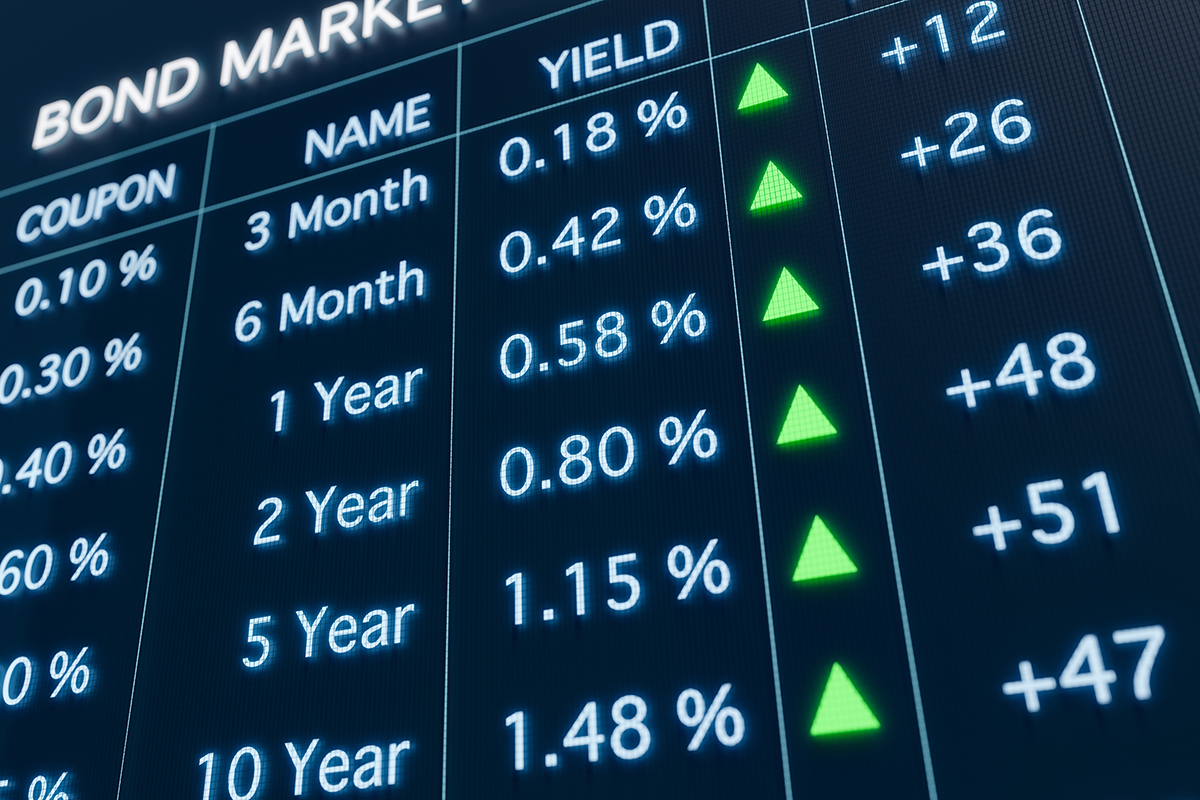
The Treasury market may be moving toward another inverted yield curve. While long-term yields have risen sharply, short-term yields have climbed even faster, dramatically narrowing the spread between the 2-year and 10-year Treasury.
Why it matters: The 2-year/10-year spread was as wide as roughly 60 basis points at the end of February. It recently narrowed to just 17 basis points before reversing somewhat and widening back to around 30 basis points.
- Evercore strategists say the curve has “flattened materially,” comparing the recent move with the period preceding the 2022 inversion, when aggressive Federal Reserve rate hikes pushed shorter-term yields above longer-term rates.
What is an inversion? Normally, investors demand higher yields to lend money for longer periods, leaving the 10-year yield above the 2-year. An inversion occurs when the 2-year rises above the 10-year, often reflecting expectations that tight monetary policy will eventually slow the economy enough to force interest rates lower.
- That’s why the curve attracts so much attention. Inversions have historically preceded U.S. recessions and periods of equity-market weakness, although they haven’t provided a reliable timetable for when a downturn will arrive.
- Evercore calculates that recessions have begun an average of roughly 15 months after an inversion. But the range has been enormous—from about five months following the 2019 inversion to 34 months following the 1978 episode.
The bottom line: We’re not inverted yet, and the recent widening back to around 30 basis points has provided some breathing room. But the speed at which the 2-year has been catching the 10-year bears watching. If short-term yields continue rising faster than long-term yields, one of Wall Street’s most closely watched recession signals could soon be flashing again.